
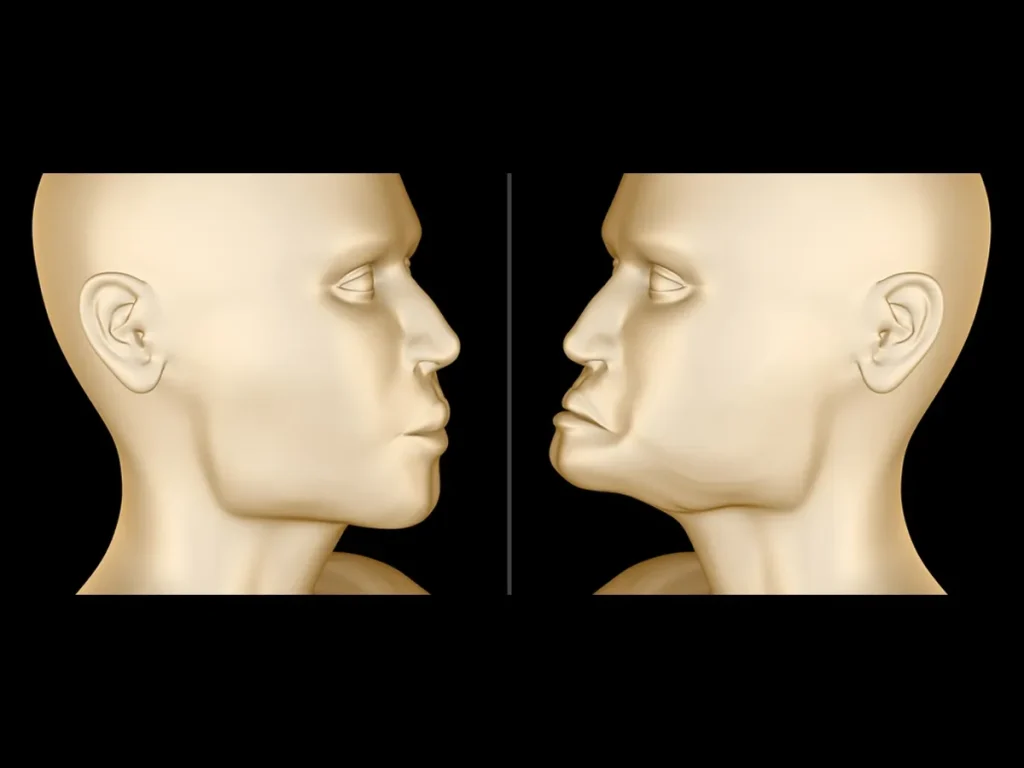
Double jaw surgery (bimaxillary) repositions the upper and lower jaws in a single surgical plan. For more complex discrepancies, moving both jaws together allows the most balanced correction of bite and facial harmony — something hard to achieve by moving only one jaw.
Related: Upper Jaw Surgery (Le Fort I) · Lower Jaw Surgery (BSSO) · Rhinoplasty (profile alignment).
When the discrepancy involves both the upper and lower jaws, or when moving a single jaw is not enough to achieve a balanced bite and facial harmony.
Yes, its scope is broader because both jaws are planned and repositioned. This makes careful planning with 3D-CT and orthodontic collaboration especially important.
A consultation to assess jaw position, bite, and the right treatment plan.